
- Home
- Walk-In Clinic
- Kidneys
- Men’s Health
- Bladder
- Bowel
- Patient Info
- Team
- Contact
- Our Locations
- Records
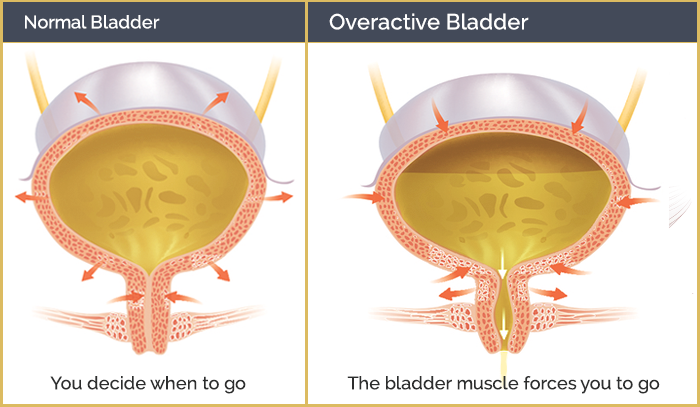
Overactive bladder (OAB) is a type of bladder-control problem that affects millions of Americans of all ages. It occurs when the muscles of the bladder contract more often than necessary, even when the bladder is not full. These contractions can create a sudden, difficult-to-control urge to urinate.
OAB is a common medical condition, but many people feel embarrassed or uncomfortable discussing their symptoms. These symptoms can interfere with work, sleep, travel, exercise, and everyday activities. Talking with a urologic provider can help determine what may be contributing to your symptoms and identify the right treatment approach for you.

A strong, difficult-to-control need to urinate.
Needing to use the bathroom more often than usual.

Waking one or more times during the night to urinate.
Feeling like you may not make it in time.

Leaking urine after a sudden urge.

Overactive bladder problems can vary from person to person and may have several possible causes. Your provider will talk with you about your symptoms, medical history and bladder habits to better understand what you’re experiencing.
Depending on your symptoms, your evaluation may include a physical exam, urine testing, a bladder diary or additional testing when needed. The goal is to identify possible causes and develop a treatment plan based on your individual needs.
Along with medical treatment, certain everyday habits may help reduce bladder irritation and improve bladder control. Your provider can help you identify changes that make sense based on your symptoms and lifestyle.