
Transperineal Biopsy

A More Precise Approach To Prostate Biopsy With A Significantly Lower Risk Of Infection.

What Is A Transperineal Biopsy?

A transperineal prostate biopsy is a minimally invasive procedure used to collect small samples of prostate tissue for testing. Unlike the traditional transrectal approach, this method accesses the prostate through the perineum (the area between the scrotum and anus), which significantly reduces the risk of infection and allows for more precise targeting of suspicious areas.

This advanced technique helps us detect prostate cancer earlier and with greater accuracy, giving you and your provider the information needed to develop the most appropriate treatment plan.
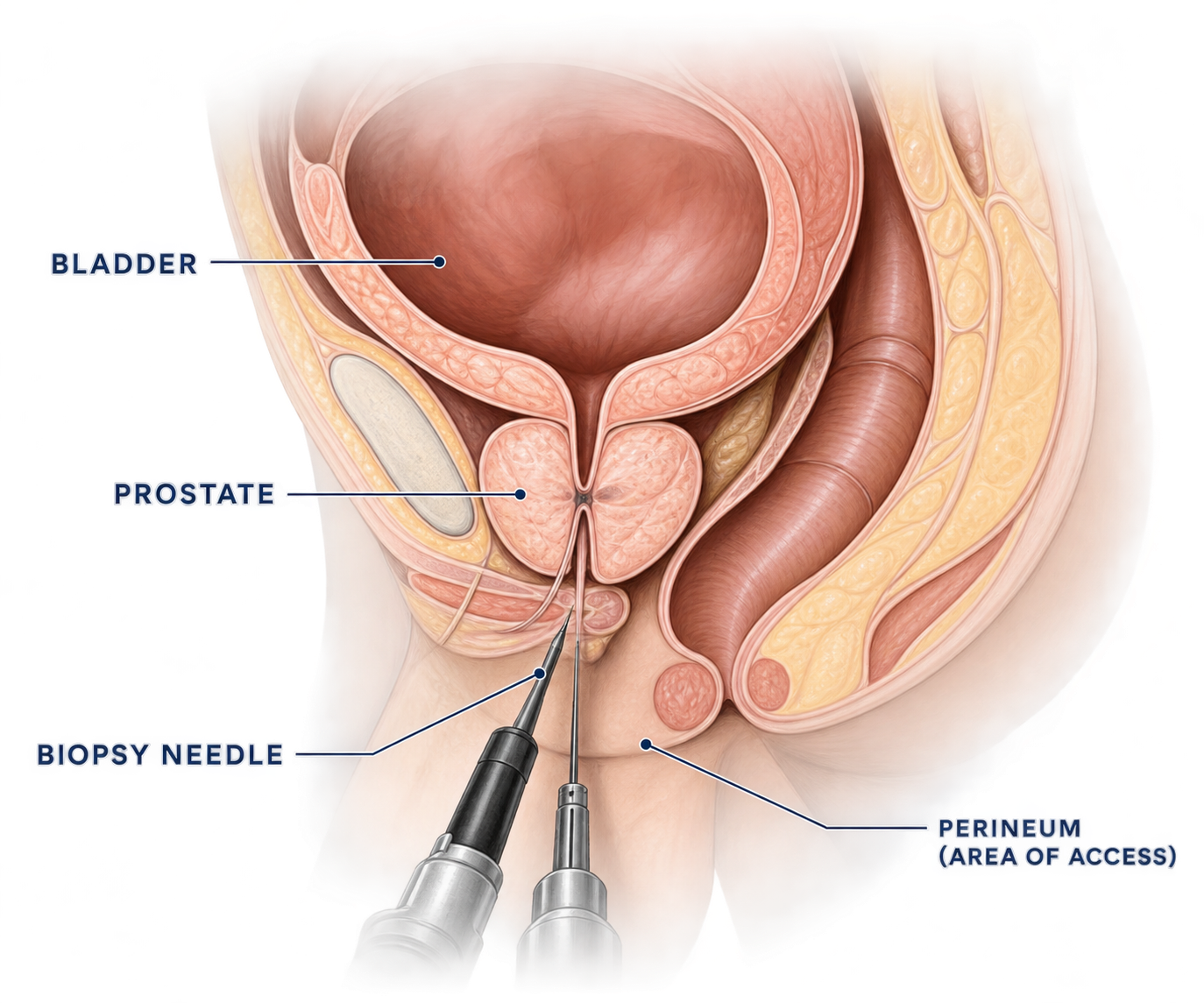

Benefits Of Transperineal Biopsy

LOWER RISK OF INFECTION

Accesses the prostate through the perineum, avoiding the rectal bacteria found in traditional biopsy methods.

MORE PRECISE SAMPLING

Allows for better access to all areas of the prostate, including the front portion, for improved accuracy.

MINIMALLY INVASIVE

A safe, outpatient procedure with a quick recovery time.

INFORMED DECISIONS

Provides detailed information to help guide your personalized treatment plan.

Understanding the Transperineal Biopsy

WATCH VIDEO

What to Expect

Here's a general overview of what to expect before, during, and after a transperineal biopsy.
1
BEFORE
  • Your provider will review your medical history and imaging results.
  • You may be given specific instructions about medications. 
  • In most cases, no bowel prep is required.
2
DURING
  • The procedure is typically performed under local or general anesthesia.
  • Using ultrasound guidance, small samples of prostate tissue are collected through the perineum.
  • The procedure usually takes 30-60 minutes.
3
AFTER
  • Most patients go home the same day.
  • You may experience mild discomfort, which typically resolves within a few days.
  • Normal activities can usually be resumed within 1-2 days.