Transurethral Access Without Incisions
While you are comfortably asleep under anesthesia, Dr. Jeremy S. Archer passes a slender, high-definition telescope (cystoscope) through the urethra to visualize the prostate and bladder.

Holmium Laser Enucleation of the Prostate (HoLEP) removes obstructing prostate tissue of virtually any size, delivering durable urinary relief and a faster recovery for men across North Mississippi.
Holmium Laser Enucleation of the Prostate (HoLEP) is a modern, minimally invasive surgical treatment for benign prostatic hyperplasia (BPH), commonly known as an enlarged prostate. As the prostate gland grows with age, excess non-cancerous tissue presses inward against the urethra and blocks the base of the bladder. This obstruction causes a weak urinary stream, frequent nighttime urination (nocturia), sudden urgency, incomplete bladder emptying, or complete urinary retention requiring a catheter.
Performed entirely through the natural urinary channel without any skin incisions, HoLEP uses a specialized holmium laser to separate and remove the entire core of overgrown prostate tissue blocking urine flow. If you think of the prostate as an orange, traditional surgeries like TURP shave away pieces of the fruit from the inside, whereas HoLEP cleanly separates the entire inner fruit from the outer rind (the prostate capsule), leaving a wide-open channel for normal urination.
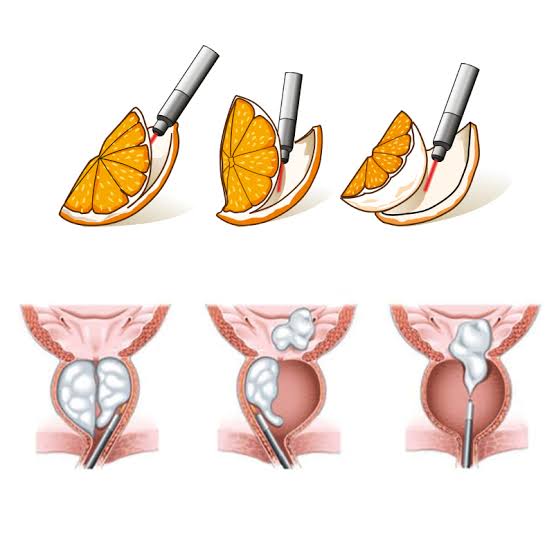
While you are comfortably asleep under anesthesia, Dr. Jeremy S. Archer passes a slender, high-definition telescope (cystoscope) through the urethra to visualize the prostate and bladder.
Using a holmium laser fiber, Dr. Archer traces the natural anatomical plane between the overgrown inner prostate tissue (adenoma) and the outer prostate capsule, gently freeing the obstructing lobes while simultaneously sealing blood vessels.
The freed prostate tissue is removed through the scope using a specialized suction instrument (morcellator) and sent to the pathology laboratory for microscopic evaluation—ensuring that any microscopic prostate cancer is detected.
A temporary catheter drains the bladder overnight. Most patients return home within 24 hours with their catheter removed and resume normal daily routines within one to two weeks.
Patients in Northeast Mississippi previously had to travel to major academic centers in Birmingham, Memphis, or Jackson to access HoLEP. Trained at the University of Florida College of Medicine Department of Urology—a high-volume academic center for endourology and holmium laser surgery— Dr. Jeremy S. Archer performs HoLEP locally at Baptist Memorial Hospital–Union County, with pre-operative evaluations and post-operative follow-up available at both Urologic’s Tupelo and New Albany clinics.
While office-based therapies and traditional TURP are typically limited to small or moderate glands (under 80–100 grams), HoLEP effectively treats severely enlarged prostates (greater than 100 grams) that previously required open or robotic abdominal surgery.
Because HoLEP removes the entire obstructing adenoma down to the surgical capsule, clinical studies show a 20-year re-treatment rate of approximately 1%, compared to 10% at 10 years for TURP and over 20% at 5 years for non-ablative implants.
The holmium laser coagulates blood vessels as it separates tissue, significantly lowering the risk of blood transfusion compared to traditional electrocautery resection and making it a safer surgical option for men who must take blood thinners (anticoagulants).
HoLEP is highly effective at freeing men with chronic urinary retention from indwelling Foley catheters or intermittent self-catheterization.
Baptist Memorial Hospital–Union County
200 Highway 30 West
New Albany, MS 38652
Consultations & Follow-Up:
Urologic’s Tupelo and New Albany clinics.
Explore how common treatment options compare for men experiencing symptoms of an enlarged prostate. Your urologist can help determine which approach is appropriate for your individual needs.
| Treatment Attribute |
Oral Medications (Alpha-Blockers / 5-ARIs) | UroLift® System | Traditional TURP |
HoLEP Laser Enucleation (Dr. Jeremy Archer) |
|---|---|---|---|---|
| How It Works | Relaxes smooth muscle or gradually shrinks prostate tissue via daily pills. | Places tiny permanent implants to hold enlarged prostate lobes apart like window curtains. | Uses an electro-current or plasma loop through a scope to trim obstructing tissue. | Uses a holmium laser to enucleate (peel out) the entire obstructing inner prostate core. |
| Ideal Prostate Size | Mild-to-moderate enlargement. | Small-to-moderate prostates (typically under 80–100g) without a large median lobe. | Moderate prostates (typically under 80–100g). | Size-independent — moderate, large, and very large prostates (over 80g to 150g+). |
| Procedure Setting & Anesthesia | Daily home prescription. | In-office at Urologic or outpatient center under local anesthesia/sedation. | Outpatient surgery under general or spinal anesthesia. | Hospital outpatient/overnight at Baptist Memorial Hospital–Union County under anesthesia. |
| Typical Catheter Duration | None. | Typically no catheter required after leaving the office. | 1 to 3 days. | Typically overnight (removed the next morning). |
|
Long-Term Durability (Re-Treatment Rate) | Symptoms return if daily medication is stopped. | Greater than 20% re-treatment rate at 5 years. | Approximately 10% re-treatment rate at 10 years. | Approximately 1% re-treatment rate at 20 years. |
| Tissue Saved for Cancer Pathology? | No. | No tissue removed. | Yes. | Yes — comprehensive tissue sample sent for pathology. |
| Suitability on Blood Thinners | Safe. | Generally safe after brief hold. | Higher bleeding/transfusion risk. | Preferred surgical option — laser seals vessels and reduces transfusion need. |
| Impact on Ejaculatory Function | 5-ARIs and tamsulosin may alter ejaculation. | Preserves ejaculatory and erectile function. | Commonly causes retrograde (dry) ejaculation; preserves erections. | Commonly causes retrograde (dry) ejaculation; preserves erections. |
Treatment suitability, outcomes, recovery, and potential side effects vary by patient. Discuss your options with your urologist.
Dr. Jeremy S. Archer offers HoLEP consultations for men seeking treatment for enlarged prostate symptoms, including very large prostates and urinary retention.