
- Home
- Walk-In Clinic
- Kidneys
- Men’s Health
- Bladder
- Bowel
- Patient Info
- Team
- Contact
- Our Locations
- Records
Transurethral Resection of the Prostate (TURP) is an established surgical treatment that removes obstructing prostate tissue to improve urinary flow and relieve bothersome symptoms of benign prostatic hyperplasia (BPH).
Effective BPH Treatment, Close to Home. At Urologic, our experienced urology team helps men throughout North Mississippi find relief from urinary symptoms through personalized treatment recommendations and comprehensive urologic care.
Transurethral Resection of the Prostate (TURP) is a surgical treatment for urinary symptoms caused by an enlarged prostate.
As the prostate enlarges, it can compress the urethra, the tube that carries urine from the bladder out of the body. This may lead to a weak urine stream, difficulty starting urination, and incomplete bladder emptying.
During TURP, your urologist uses a specialized surgical instrument to remove the prostate tissue obstructing urine flow.
No external incision is required. By removing obstructing tissue, TURP creates a wider channel for urine to pass through, helping improve urinary symptoms.
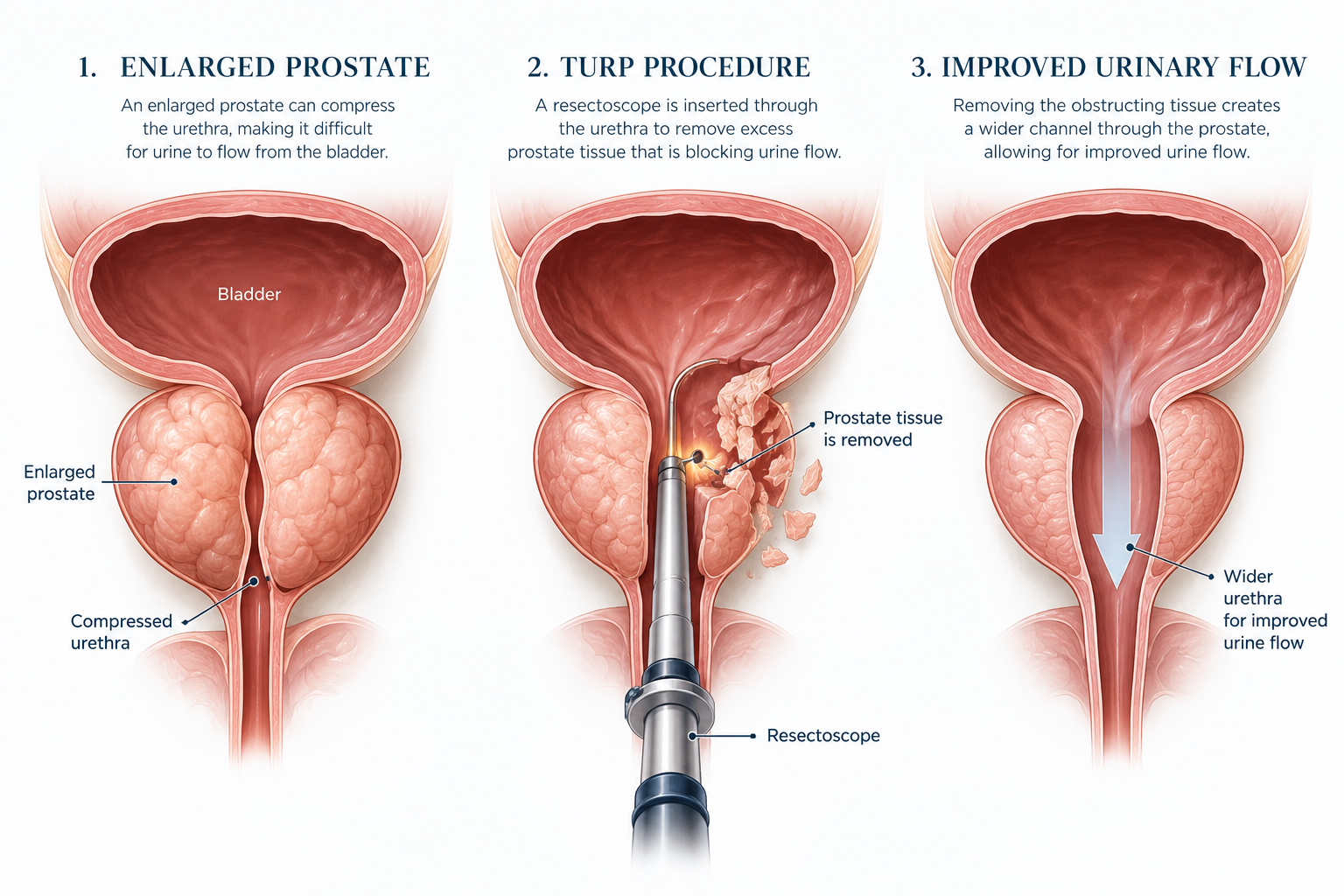
TURP removes obstructing prostate tissue to improve urinary flow.
Important to know: TURP treats urinary obstruction caused by benign prostate enlargement. It is not a treatment for prostate cancer.
An enlarged prostate can interfere with normal urinary function. TURP may be recommended when symptoms become disruptive, particularly when medications have not provided adequate relief.
TURP may be appropriate for men experiencing moderate to severe urinary symptoms caused by BPH, especially when medication has not provided sufficient relief.
Your urologist will evaluate your symptoms, prostate size and anatomy, overall health, and treatment goals to determine whether TURP is a suitable option.
Other treatments, including HoLEP, may also be discussed depending on your individual needs.
TURP is typically performed under general or spinal anesthesia in a hospital or surgical setting. The procedure involves three main steps.
Your urologist inserts a specialized surgical instrument called a resectoscope through the urethra.
No external incision is needed.
The surgeon uses the instrument to remove prostate tissue obstructing urine flow.
This creates more space for urine to pass through the prostate.
Removing the excess tissue creates a wider urinary channel to help relieve obstruction.
A temporary urinary catheter is commonly placed during the initial recovery period.
TURP is an established surgical treatment that can provide significant, long-lasting relief from urinary obstruction caused by an enlarged prostate. Like any procedure, it also carries potential risks.
Every patient is different. Your urologist will discuss the potential benefits, risks, and alternatives to TURP based on your medical history and treatment goals.
Recovery varies from patient to patient. Some individuals return home the same day, while others may require a short hospital stay.
A temporary urinary catheter is commonly used following TURP. Mild bleeding, urinary urgency, and discomfort may occur as the surgical area heals.
Many patients gradually resume their usual activities over several weeks, depending on their recovery and their urologist’s recommendations.
Your Urologic care team will provide individualized recovery instructions before you return home.
TURP is a surgical procedure performed under anesthesia, but it does not require an external incision. It still carries surgical risks and requires a recovery period.
Many patients gradually return to normal activities over several weeks, although recovery varies. Your urologist will provide personalized instructions based on your procedure and healing progress.
TURP can provide long-lasting relief from urinary obstruction. However, prostate tissue may continue to grow over time, and some patients may eventually require additional treatment.
Both procedures remove prostate tissue to improve urinary flow. TURP uses a surgical resectoscope to remove obstructing tissue, while HoLEP uses a laser to separate enlarged prostate tissue.
The most appropriate approach depends on prostate size, anatomy, medical history, and individual treatment goals.
Retrograde ejaculation is a common side effect of TURP. Erectile dysfunction is less common but may occur. Your urologist can discuss potential sexual side effects before treatment.
You don’t have to let urinary symptoms interfere with your everyday life. Our team at Urologic can help you understand your options and determine which BPH treatment may be right for you.
Request an Appointment